 |
 |
 |
 |
|
|
|
|
|
|
|
 |
 |
 |
||
|
|
|
|
|
|
 |
 |
 |
||
|
|
|
|
|
|
 |
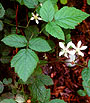 |
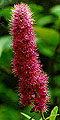 |
||
|
|
|
|
(Return to Family List)
The Rosaceae is a big component of our flora. The family is distributed mostly in the temperate zone of the northern hemisphere. The Rosaceae is also a big component of our diets, since most of the commercial fruits we eat are members of the Rosaceae. There are also many important ornamentals among the Rosaceae. Economically important genera include Spiraea, Rosa, Rubus, Potentilla (cinquefoil), Fragaria (strawberry), Pyrus (pear) and Malus (apple), Sorbus (mountain ash), Amelanchier (serviceberry), Pyracantha (firethorn), Crataegus (hawthorn), Prunus (cherry, peach, plum, apricot, almond), Cotoneaster, Chaenomeles (flowering quince) and Cydonia (quince). As this list suggests, members of the Rosaceae are extremely important for fruits and as ornamentals.
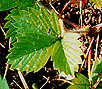
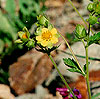
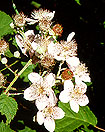
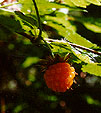
Members of the Rosaceae are herbs, shrubs, or trees; leaves are alternate with paired stipules, and flowers are radially symmetrical, bisexual, with a hypanthium, and often showy. The flowers usually have 5 petals (or more in ornamental hybrids) that are attached to the rim of the hypanthium and numerous (occasionally just 5 or 10) stamens. The ovary is one of three types: a single superior carpel (e.g., plums), many distinct superior carpels (e.g., roses, strawberries, blackberries), or five fused inferior carpels (e.g., apples).
|
|
|
|
|
|
|
|
|
|
|
|
|
|
|
|
||
|
|
|
|
|
|
|
|
|
|
||
|
|
|
|
|
|
|
|
|
|
||
|
|
|
|