 |
 |
 |
 |
|
|
|
|
|
 |
 |
 |
 |
|
|
|
|
|
(Return to Family List)
Common Fern Family
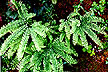
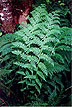
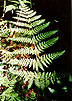
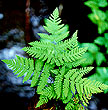
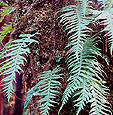
The Polypodiaceae is the family of typical ferns. We have many genera of ferns represented in the western Washington flora; only the local leptosporangiate ferns are described here. All ferns in this family have horizontal rhizomes as the only stems and essentially all of the above-ground growth consists of leaves called fronds. The fronds unroll as they mature from characteristic "fiddleheads." Fronds are generally, but not always, 1, 2, or 3 times pinnately compound. Some ferns have evergreen fronds (Dryopteris, Blechnum, Polypodium, and Polystichum) whereas others are deciduous (Adiantum, Athyrium, and Pteridium). Spores are produced in clusters of sporangia ("sori") on the backs of fronds. The clusters are usually covered by sterile tissue (the "indusium") until the spores are mature. Ferns are distinguished by characteristics of the fronds, the distribution of the sori, and the nature of the indusium. Fertile fronds occasionally differ in form somewhat from sterile fronds (the fronds are "dimorphic" as in Blechnum spicant). The spores develop into free-living, photosynthetic, heart-shaped gametophytes, which can sometimes be found on tip-up mounds in forests where adult ferns are common. Water is required for fertilization.
|
|
|
|
|
|
|
|
|
|
|
|
|
|
|
|
|
|
|
|